

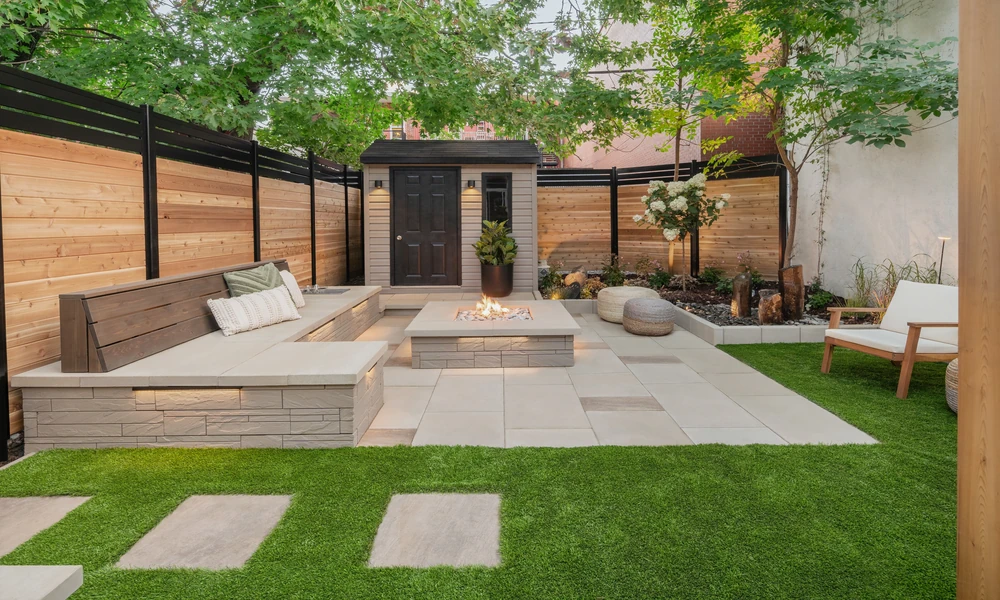
I watched my neighbor drop nineteen grand on a paver patio in April and watch it turn the color of chalk by August. That is the whole problem with backyard work in the desert Southwest. Everything looks fantastic on install day, and then the sun spends four months quietly grading your choices. If you are planning a remodel, the harsh heat is the client you never met and the one whose opinion matters most.
Good news, though. A yard built for this climate costs about the same as one built for a mild one, as long as you make the heat decisions before the first shovel hits dirt. Below is the planning order that saves you the most money, the shade math that keeps a patio usable, and the failure points to inspect every season. A few of those failures you can check yourself with nothing but a hose and ten minutes.
Why most desert remodels fail in year two
The number one killer is not the heat itself. It is thermal shock, the daily swing from a 110 degree afternoon to a 70 degree night. Materials that expand and contract at different rates will fight each other until one of them loses. Concrete cracks, grout crumbles, and wood checks. Every single time.
So your first planning job is grouping materials by how much they move. Keep poured concrete near poured concrete. Keep stone near stone. When you have to marry two different materials, you need an expansion joint or a flexible filler doing the work at the seam. That tiny strip of rubber or sand is the difference between a patio that lasts a decade and one with a crack running straight through the middle.
The second failure is trapped water. Runoff that pools against a wall or sits under a planter wicks up into masonry and never fully dries. In dry air, moisture leaves the surface fast while the core stays wet, and that gradient is what spalls brick and peels finishes. Slope everything away from the house, and if you are not sure about your grading, watch what happens during your next monsoon. Water will draw you a map of every low spot in the yard.
Start with shade, not with the pretty stuff
You can pick tile until your eyes cross, and it will not matter if half your yard is unusable from May through September. Shade is the structural decision, and it should get settled before finishes.
Here is the tested approach: shade the west side first. Afternoon sun hits from the west, so it is the harshest light of the day. Morning shade on the east side is nice, but it does not rescue a dinner on the patio at six in the evening.
Three options, ranked by how much I would trust them in this climate:
- Solid roof pergola. Costs the most, works the best. An insulated roof panel blocks the radiant heat instead of just the glare, so the space under it can run noticeably cooler than a slatted structure. Verify it is engineered for local wind exposure before anyone pours footings.
- Slatted pergola with a fabric or louvered top. Middle of the road, and it lets you tune the shade through the year. The tradeoff is that fabric covers degrade and need replacing, so budget for it as a consumable, not a one time purchase.
- Trees. Cheapest over the long run and the most pleasant to sit near. The catch is time. A fifteen gallon mesquite or palo verde still needs years before it shades a real seating area, so plant it now even if your hardscape comes later. The EPA outlines how tree canopy cools surfaces and neighborhoods, which is worth a look if you want the reasoning behind planting first.
Choose surfaces you can actually maintain
Aim for light colors. Light surfaces reflect a good chunk of the sun’s energy, and dark surfaces absorb it and then radiate it back at your ankles. That is why a dark paver patio can burn bare feet at the same air temperature where a pale one stays walkable.
Travertine and porcelain pavers handle heat and moisture better than most flagstone. They stay flatter, resist staining, and do not need annual sealing to keep looking sharp. Concrete with an integral color holds up well too, provided it has control joints placed on a sensible grid. If a contractor tells you joints are unnecessary because the mix is strong, get a second opinion.
And skip artificial turf unless you have tested it barefoot in July. It reads as the easy answer on paper, then bakes in direct sun and holds heat far longer than the ground around it. Fake grass has a place in deep shade. It does not belong in an open lawn.
Ground cover matters for the same reason. Bare soil dries and blows, gravel reflects heat upward, and dense low planting keeps the surface cooler. Whatever you plant, water it deeply and less often so roots drive down instead of sitting near the hot surface.
The three point pre-monsoon inspection
Wind is the overlooked destroyer out here. Sustained heat weakens things slowly, then one gust from a monsoon finishes the job. The National Weather Service documents the wind and dust patterns that drive these storms, and knowing the seasonal threat makes a short annual checklist worth the effort.
Run this in late spring, before the storms arrive, and again after the first big blow:
- Push test on every shade structure. Lean your weight against a post. Any wobble means the anchor is loose, and loose anchors in hot soil get looser. Tighten or replace before the season, not after a panel lands on the grill.
- Hose test on every surface. Flood the patio and the planting beds, then walk the perimeter looking for standing water. Any spot that still holds a puddle ten minutes later needs slope correction or a drain.
- Seam test on every joint. Check the sealant and expansion joints between different materials. If the filler is cracked or pulling away, moisture is already getting in, and heat will finish the crack next summer. This is the cheapest thing on the list to fix and the most expensive to ignore.
That second test, the hose test, tells you more about your yard than any inspection report. Water is honest. It goes where the ground sends it, and if that is toward your foundation, you have a problem worth solving now.
When you hire, ask two questions. Does the bid break out labor, materials, and drainage separately? And can they name a project of theirs that has been through five summers? The second question separates a builder who knows this climate from one who just knows how to pour concrete. Homeowners often find their best options through backyard renovation contractors in Henderson and nearby communities recommend, since experience in the local heat is the credential that actually shows up in the work.
What cooling a yard actually saves
Shade and light surfaces do more than comfort. They reduce the heat your home absorbs, which eases the load on your air conditioning. The Department of Energy explains how reflective surfaces and shade lower cooling demand, and in a place where summer bills spike hard, that payback arrives every single year.
So treat your yard as cooling equipment that happens to look good, not as decoration that happens to sit outside. Plant the shade trees now. Group your materials. Build the drainage in from day one. Your patio will still be there, uncracked, when the neighbors are on their second pour. Which one of these failure points is your yard already hiding?
