

Most homeowners in New Hampshire buy their baseboard heaters in a hurry, usually in October, usually because the old ones started clanking and the first hard freeze is already on the calendar. That hurry is expensive. I’ve watched people pay for oversized units, wrong voltage, and installs done by whoever picked up the phone first.
Here’s the good news: baseboard heat is one of the simplest, most repairable heating systems in a house. If you know four things before you buy, you’ll spend less and stay warmer. This guide covers what those four are, how electric and hot water systems differ, and how to vet professional baseboard heater installers in NH without getting talked into a system that doesn’t fit your house or your budget.
Electric vs. hot water: figure out which one you actually have
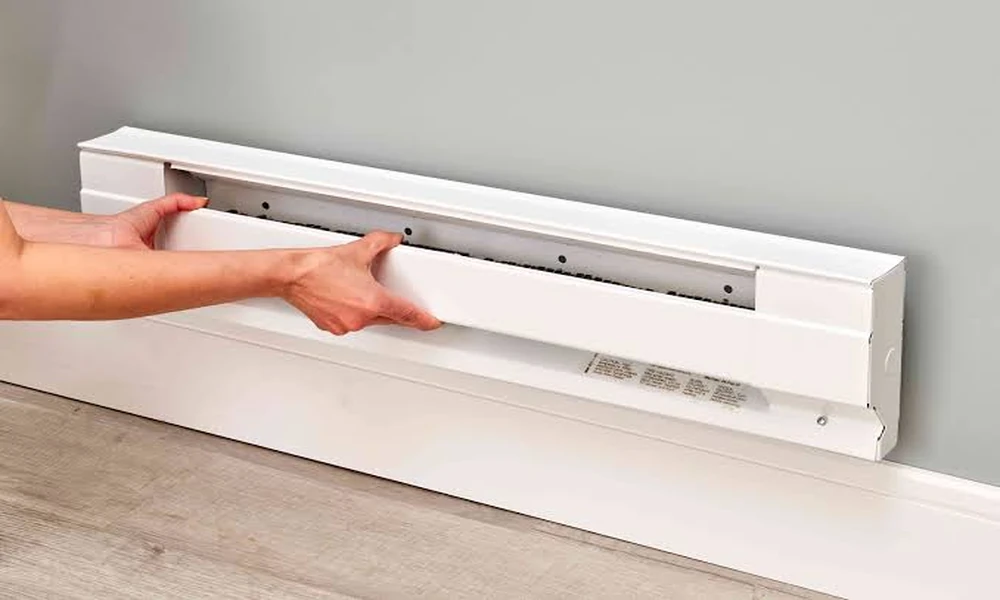
This is the first mistake I see. People order replacement electric baseboards when the house runs a hot water loop from a boiler, or the reverse. Pull the cover off an existing unit and look inside. Electric baseboard heaters hold a visible heating element with fins and connect to 240 volt wiring. Hot water baseboards carry a pipe or a fin tube with water running through it, and they tie back to a boiler somewhere in the basement.
If your house has a boiler and cast iron radiators in the living room, you almost certainly have a hot water system, and adding electric baseboards to the same zone is a downgrade. If your place was built with individual thermostats in every room and no boiler in sight, it’s electric. Ten minutes with a flashlight settles it.
Why the fuel source changes the whole conversation
Electric baseboard heat costs whatever your utility charges per kilowatt hour. A hot water system costs whatever your fuel costs, oil, propane, or gas. That means the same square footage can be cheap in one house and painful in another. If you’re on electric and the room is large, a heat pump often beats baseboard on operating cost over a full winter, so ask an installer to price both before you commit. If you’re on hot water already, replacing a tired fin tube unit is a much smaller job.
Get the sizing right, not the marketing right
Baseboard heaters are rated by wattage per linear foot, and the standard for a room comes down to matching the heat loss. Nobody can size it from your address and square footage alone. Ceiling height, window quality, insulation, and how much of the wall is exterior all matter. A bedroom over an unheated garage needs more than one over a heated hallway, and a sunroom with three walls of glass needs more than either.
What you want is an installer who measures the room, checks insulation and window condition, and does a quick load calculation before suggesting a length. If someone quotes you a length over the phone, that’s a sign. Ask what they based it on.
A rough way to think about it
As a starting point, electric baseboards are commonly rated around 250 watts per linear foot, and rooms in older New England homes often want somewhere in the range of 8 to 12 watts per square foot of floor area, with more for drafty or poorly insulated spaces. Treat those as a sanity check on a quote, not a formula to build from. The load calculation is what counts.
Placement rules that save you from cold floors and dead outlets
Where the unit goes matters as much as what you buy. A few rules that hold up in real houses:
- Keep furniture at least a foot clear of the face. A couch pushed against a baseboard heater blocks most of its output.
- Don’t tuck a heater beneath a window with long drapes that hang to the sill.
- Leave the manufacturer’s listed clearance to combustibles, and never run cord or carpet over the unit.
- Don’t install baseboard heat in a bathroom where it will get splashed, no matter what the box says.
Electric baseboard units run hot to the touch while they’re working, so clearance isn’t a suggestion. The National Fire Protection Association sets the electrical and life safety standards installers work from, and a licensed electrician will follow them for the wiring and breaker side of the job.
What the install actually involves
For electric, the job means running a dedicated 240 volt circuit from the panel, mounting the unit level, wiring it, and connecting a thermostat, either a wall unit or a built-in dial. If your panel is full or your service is undersized, that’s a separate upgrade and you should hear about it before work begins, not halfway through.
For hot water, the crew has to isolate and drain the zone, cut out the old unit, fit the new one, and refill and purge the loop. Purging is the step that gets rushed. Air left in a hot water loop means a gurgling zone, uneven heat, and a callback.
Permits, timing, and the panel question
Most New Hampshire towns require an electrical permit for new circuits, and many require one for a hot water zone swap too. Ask your installer who pulls the permit. The good ones just tell you before you ask. In terms of timing, aim to book in late summer or early fall. Every heating contractor in the state is buried from the first cold snap onward, and emergency calls jump the queue ahead of installs. That’s just how the trade works.
How to vet an installer without overthinking it
You don’t need a ten page vetting process. You need to ask four questions and listen to the answers.
- Are you licensed for this, and who pulls the permit?
- Will you size the room before quoting, or quote from square footage?
- Do you service what you install, or hand it off?
- What’s your lead time in October, and what does a callback cost me?
On that last point, look for a shop that’s been around long enough to have a service department. The Bureau of Labor Statistics tracks the heating and air conditioning trade as part of the broader construction sector, and the trade is steady, but plenty of one truck operations open and close inside three years. Longevity isn’t a guarantee, but it’s a decent proxy for someone who’ll answer the phone in February.
The part most buyers skip: the thermostat
If you’re replacing electric baseboards and you’ve got dial thermostats on every wall, spend the extra money on line voltage programmable or smart thermostats while the installer is already there. Same visit, similar wiring access, much better control over a room by room system. It’s the highest return upgrade in this whole project, and most people skip it because they’re focused on the heater itself. Don’t be most people.
The U.S. Department of Energy consistently points to controls and zoning as some of the cheapest efficiency gains in a home heating setup, and baseboard systems are the easiest place to apply it, since every room already runs on its own circuit.
The short version
Find out what system you have, size the room instead of the square footage, keep the clearances, and hire someone who measures before quoting and services what they install. Do those four things and baseboard installation becomes a boring, one day project instead of a two month headache. If your current heaters are past their prime, get two or three quotes now, before the calendar turns and the queue gets long. The best time to think about heat in New Hampshire is the week you’re not thinking about it at all.
